The rapid evolution of artificial intelligence has given rise to a new category of software tools known as AI agent platforms—systems designed to execute complex, multi-step tasks autonomously on behalf of users. As organizations seek to leverage AI for productivity gains, two platforms have emerged as prominent contenders in this space: Claude Dispatch, developed by Anthropic, and OpenClaw, an open-source AI agent runtime.
Understanding the fundamental differences between these platforms is essential for technical decision-makers evaluating AI agent infrastructure.
The comparison between Claude Dispatch vs OpenClaw represents more than a feature-by-feature evaluation; it reflects a deeper philosophical divide in how AI agent infrastructure should be architected and deployed.
- Claude Dispatch embodies a managed, convenience-first approach where the vendor handles complexity, security, and infrastructure.
- OpenClaw represents a sovereignty-first philosophy where users maintain complete control over their AI systems, from model selection to data handling to execution environment.
These divergent approaches create fundamentally different user experiences, cost structures, and suitability for various organizational contexts.
This article provides an in-depth analysis of both platforms, examining their architectural foundations, capabilities, security models, cost structures, and optimal use cases to equip you with the information needed to make an informed decision between Claude Dispatch and OpenClaw.
1. Platform Overview and Background
1.1 Claude Dispatch: Anthropic’s Managed AI Agent Solution
Claude Dispatch is a feature within Anthropic’s Claude Cowork ecosystem, launched in March 2026 as a research preview. The platform enables users to send task instructions from mobile devices and have Claude execute those tasks on their desktop computers. This cross-device capability represents a significant evolution in human-AI collaboration, allowing users to initiate complex workflows during brief moments of downtime and retrieve completed work upon returning to their primary workstation.
The technical architecture of Claude Dispatch centers on Anthropic’s cloud infrastructure, which orchestrates task routing between mobile and desktop clients. When a user sends an instruction from the Claude mobile app, the request passes through Anthropic’s servers before being executed locally on the user’s desktop machine.
Claude Dispatch integrates with 38+ native connectors, enabling it to interact with popular productivity tools including Slack, Google Workspace, and DocuSign. The platform’s computer use capability allows Claude to directly control the user’s browser, mouse, keyboard, and screen when specialized connectors are unavailable.
1.2 OpenClaw: Open-Source AI Agent Runtime
OpenClaw emerged as one of the fastest-growing open-source projects in AI history, reaching 145,000+ GitHub stars shortly after release. Rebranded from “WhatsApp Relay” in early 2026, the platform functions as an MIT-licensed AI agent runtime that can be deployed on user-controlled infrastructure, offering unprecedented flexibility in model selection, tool integration, and deployment environment.
The architectural philosophy behind OpenClaw emphasizes sovereignty and modularity. The platform operates as infrastructure rather than a managed product, requiring users to configure and maintain their own agent deployments. This grants complete control over data handling.
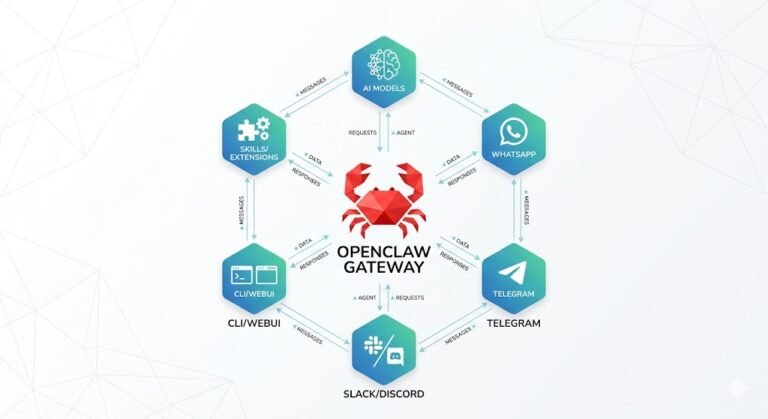
OpenClaw supports multiple messaging platforms (WhatsApp, Telegram, Signal, etc.), and distinctively offers multi-model support. Users can switch between different AI models mid-session, moving from Claude to GPT-4 to locally-hosted models via Ollama as task requirements dictate. The project maintains 18 repositories, including ClawHub (a skill directory and marketplace).
2. Architectural Comparison
The central debate when evaluating Claude Dispatch vs OpenClaw begins with where the infrastructure lives and who controls it.
2.1 Infrastructure and Deployment Models
Claude Dispatch operates on a delegated infrastructure model. Anthropic maintains the orchestration layer, safety systems, and model serving infrastructure. Users interact through Anthropic’s clients (mobile and desktop apps) without needing to manage underlying components. This model prioritizes ease of use at the cost of flexibility and direct control.
OpenClaw implements a sovereign infrastructure model. Users deploy and operate the agent runtime on their own systems. While the platform provides the core agent logic, users must provision servers, manage API keys, and configure webhooks. This demands technical expertise but rewards users with complete transparency and data sovereignty.
| Dimension | Claude Dispatch | OpenClaw |
| Infrastructure Owner | Anthropic (managed) | User (self-hosted) |
| Model Selection | Claude only | Any model (Claude, GPT-4, local) |
| Deployment Time | ~60 seconds | Hours to days |
| Operating Systems | macOS, Windows x64 | macOS, Windows, Linux |
| Messaging Channels | Claude app only | WhatsApp, Telegram, Discord, etc. |
2.2 Control and Customization
Within the context of Claude Dispatch vs OpenClaw, customization is a major differentiator.
Claude Dispatch operates within a carefully curated ecosystem. Users interact with one model governed by one company’s safety framework. While polished and predictable, users cannot modify system prompts, swap models, or extend capabilities beyond official connectors.
OpenClaw positions itself as infrastructure, offering granular control. Users choose their AI model, write custom prompts, define safety boundaries, and can audit, fork, or modify the codebase. This power demands responsibility; users must architect their own error handling and security measures.
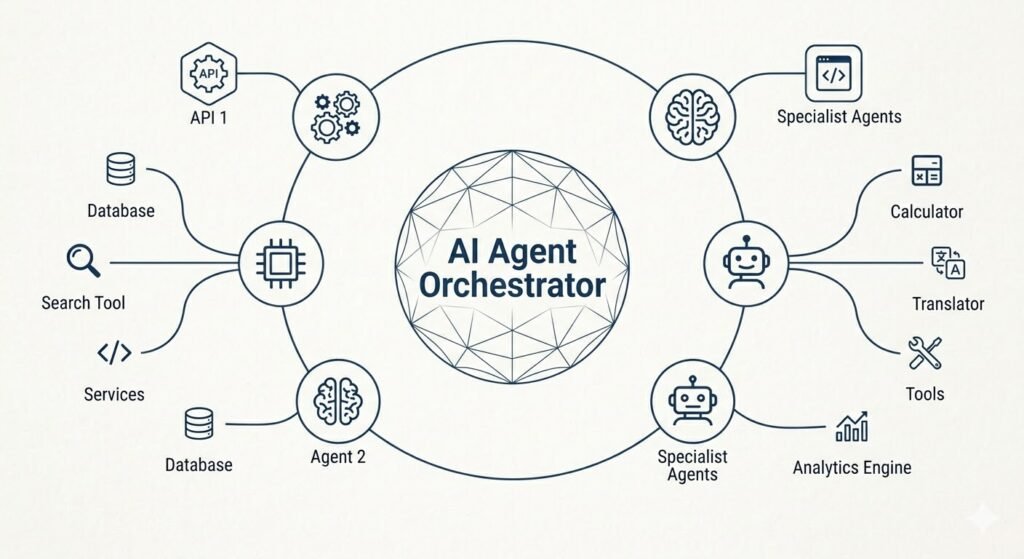
Abstract visualization of AI Agent orchestration and tool connectivity.
3. Feature and Capability Comparison
3.1 Claude Dispatch Capabilities
Claude Dispatch offers a curated set of capabilities designed for knowledge workers. Through native integrations, the platform can pull data from local spreadsheets, search Slack history, and build formatted presentations. The computer use capability extends this reach to any desktop application through direct GUI manipulation.
Features include:
- Scheduled Tasks: Configure recurring workflows (e.g., automatic morning email check).
- Persistent Context: Tasks execute within a single conversation thread synchronized across devices.
- Safety-First Approach: Implicit permission requests before accessing new applications and automatic detection for prompt injection attacks.
3.2 OpenClaw Capabilities
OpenClaw provides an extensive capability set targeting technical users and automation scenarios.
Features include:
- Multi-Model Session: Seamless switching between Claude, GPT-4, and local models (via Ollama) during active sessions.
- System-Level Access: Execute terminal commands, interact with local databases, and orchestrate hardware integrations.
- Custom Workflow Chaining: Complex automation spanning multiple services and logic branches.
- Skill Marketplace: ClawHub provides community-created extensions for specialized use cases.
Feature Comparison Matrix
| Feature | Claude Dispatch | OpenClaw |
| Multi-Model Support | No (Claude only) | Yes |
| Computer Use | Yes | Yes |
| Scheduled Tasks | Yes | Yes |
| Webhook Support | No | Yes |
| Custom Workflows | Limited | Full |
| System-Level Access | Limited | Full |
| Extension Marketplace | No | Yes (ClawHub) |
4. Security and Privacy Analysis
4.1 Claude Dispatch Security Model
Claude Dispatch implements a managed security model. Anthropic maintains responsibility for infrastructure security and model safety.
- Task instructions pass through Anthropic’s cloud infrastructure before local execution.
- Execution occurs in a sandboxed environment where files remain on the user’s machine.
- Organizations with strict data governance prohibit transmitting data to third-party cloud services may find this architecture incompatible.
4.2 OpenClaw Security Model
OpenClaw’s self-hosted architecture places security responsibility entirely with the user.
- Messages, files, and workflows can remain within user-controlled infrastructure when properly configured.
- Supports local model execution for truly air-gapped deployments.
- The attack surface requires knowledgeable configuration and ongoing maintenance. Organizations including Cisco have characterized improperly secured OpenClaw installations as security liabilities. For organizations lacking dedicated security expertise, the managed protections of Claude Dispatch may prove more secure.
5. Cost Analysis and Pricing
5.1 Claude Dispatch Pricing Structure
Claude Dispatch requires a paid Anthropic subscription, structured as a predictable monthly fee.
- Claude Pro: $20 per month (rolling availability for Dispatch).
- Claude Max: $100-200 per month (immediate access, higher usage limits).
- Cost Predictability: Users pay a fixed amount regardless of task volume, eliminating concerns about unexpected API charges or token-based billing.
5.2 OpenClaw Cost Considerations
OpenClaw software is free under the MIT license, but “free” requires analysis of total cost of ownership.
- API Costs: Users pay per-token charges (Claude API, GPT-4) varying by usage. Power users might spend $15-20+ monthly.
- Infrastructure Costs: Requires servers, networking, monitoring, and potentially dedicated hardware for local model execution.
- Hidden Costs: Setup time, maintenance, security hardening, and troubleshooting represent significant hidden costs. For technically sophisticated users, OpenClaw can deliver lower costs at scale.
6. Use Case Recommendations
When choosing Claude Dispatch vs OpenClaw, the best path depends heavily on resources, expertise, and organizational goals.
6.1 When to Choose Claude Dispatch
Claude Dispatch emerges as the optimal choice for knowledge workers needing mobile-to-desktop task handoff for document creation, email processing, or research synthesis.
It is best suited for:
- Organizations invested in Claude subscriptions without dedicated technical resources.
- Teams prioritizing vendor-managed security and immediate productivity gains.
- Small to medium teams seeking predictable monthly AI costs.
6.2 When to Choose OpenClaw
OpenClaw proves superior for technical users and organizations requiring complete control over their AI infrastructure.
It is best suited for:
- Regulated industries (healthcare, finance, legal) requiring data sovereignty and audit trails.
- Development teams needing AI integration with existing toolchains (GitHub, CI/CD pipelines).
- Research teams needing transparent AI systems with full access to reasoning processes.
- Power users requiring mid-session model switching.
7. Setup and Deployment Guide
7.1 Claude Dispatch Setup Process
Setup follows a streamlined process designed for rapid activation without technical expertise.
Approximate Time: 60 seconds
- Update Claude Desktop and mobile applications to the latest version.
- Open Claude Cowork in the desktop application.
- Click “Dispatch” and scan the displayed QR code using the mobile app.
- Begin dispatching tasks.
7.2 OpenClaw Setup Process
OpenClaw deployment requires technical expertise and infrastructure planning.
Approximate Time: Several hours
- Clone the OpenClaw repository:
git clone https://github.com/openclaw/openclaw.git - Install dependencies using pnpm:
pnpm install - Configure API keys and webhooks.
- Run in development mode:
pnpm dev - Build and deploy for production:
pnpm build
Production deployments require additional considerations including server provisioning, SSL certificates, monitoring, and security hardening.
8. Conclusion
Neither Claude Dispatch nor OpenClaw is universally superior. They represent different strategies for a rapidly evolving AI landscape.
Organizations must evaluate their technical expertise, data sensitivity, and philosophical preferences regarding system control. Claude Dispatch excels for teams seeking immediate productivity gains without technical overhead. OpenClaw dominates for technical users and organizations requiring complete control over their AI infrastructure.
As the AI agent platform landscape evolves, Anthropic will likely expand Claude Dispatch capabilities and integrations. OpenClaw’s community-driven model ensures continuous innovation through new extensions. This strategic decision will shape how organizations leverage AI automation for years to come.